

Our Linseed Adventure: Trials, Triumphs and Learning as We Grow.
Date Posted:2 April 2026
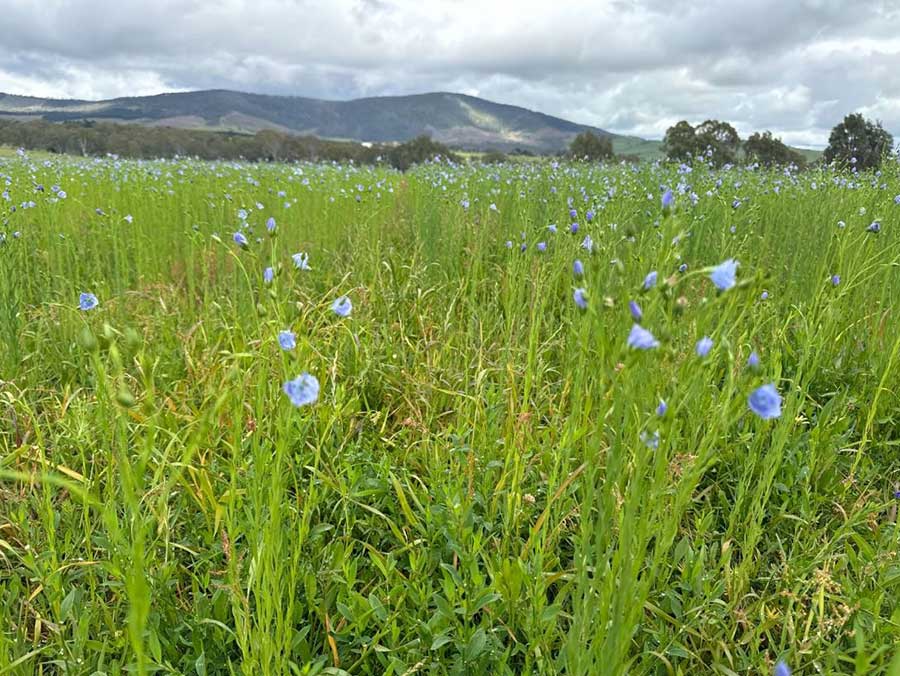
As promised we have grown some Linseed again!
I am going to share our journey here but please be gentle on me, we are not croppers. The reason that I am going to share this is because in Australia the disconnect between growing our food and the customer is widening and we need to understand that if we don’t support our farmers here we could lose them to other commodities and be forced into relying on imports where we could unintentionally create a worse situation.
We know that a lot of you are worried about the amount of chemicals being used in food production and rightly so in an ideal world we wouldn’t need chemicals however in the case of growing Linseed the use of some chemicals can be the difference between a successful crop and a disaster and I will try my best to show you why.
Staring Out With The Right Seed
The sowing seed that we used last year is a new line of Linseed that Dad (Fred) has been trialling that he believes could be a better variety. It is more suited to our environment and it was time to bulk it out further.
As this was a last minute decision and we had done no paddock preparation, we picked a paddock on our home farm and we started with a knockdown spray to kill the weeds in the hope to allow the Linseed to get a strong germination, a head start on any weeds that were to come.
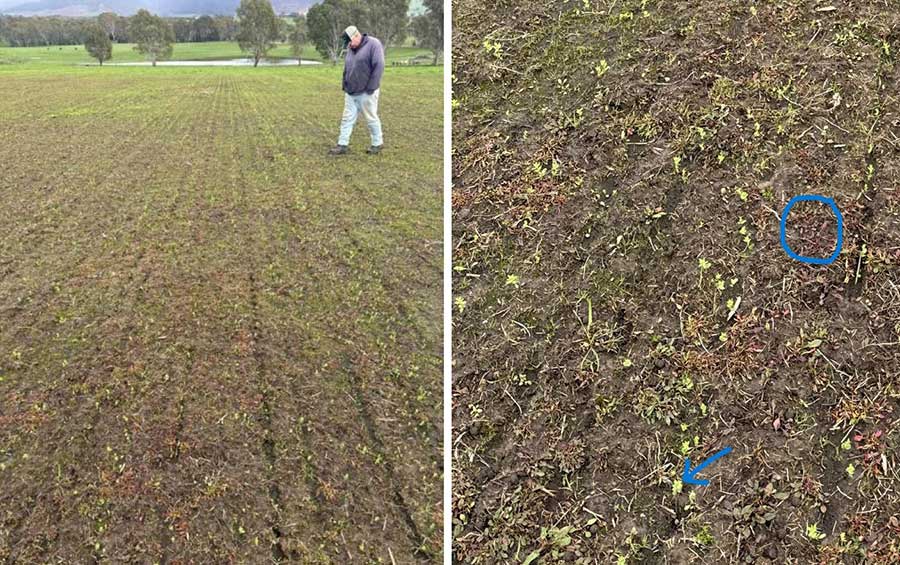
In the photos below you can see Mark checking the Linseed and you can also see how the chemical gives the Linseed a head start with the weeds browning off, whilst the Linseed gets its roots down into moisture that it would be otherwise competing for if the weeds were still actively growing.
Sowing the Linseed
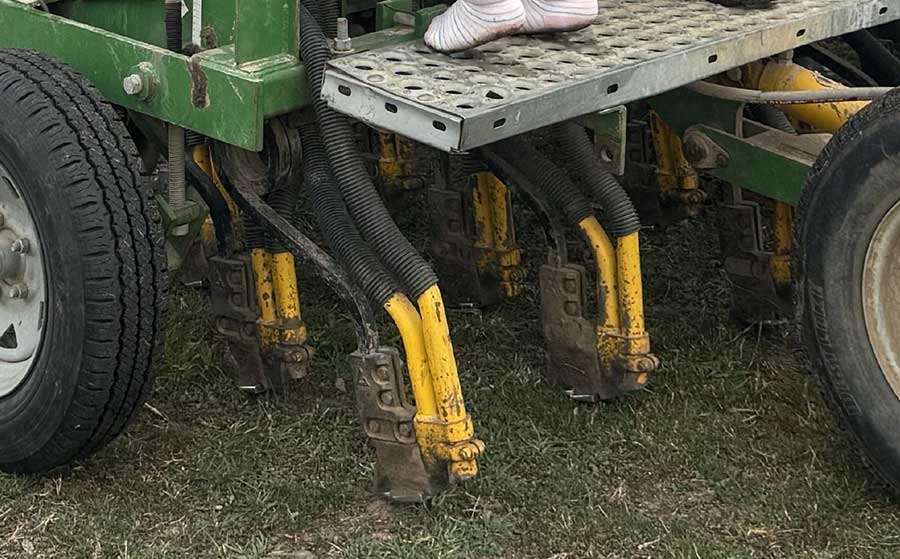
We sowed the Linseed and fertilised together using a direct drill combine to avoid soil disturbance. Direct drill combines slice the soil with a tine, drops the seed and fertiliser into the furrow before letting the soil close over and then a press wheel or roller flattens the soil back down to hopefully get good seed to soil contact.
(The tines are in the ground here and it is not the Linseed but you can see how the seed and fertiliser are delivered)
We decided to feed this crop with synthetic fertilizer at sowing because we couldn’t afford to lose the seed and at the time we felt this was best.
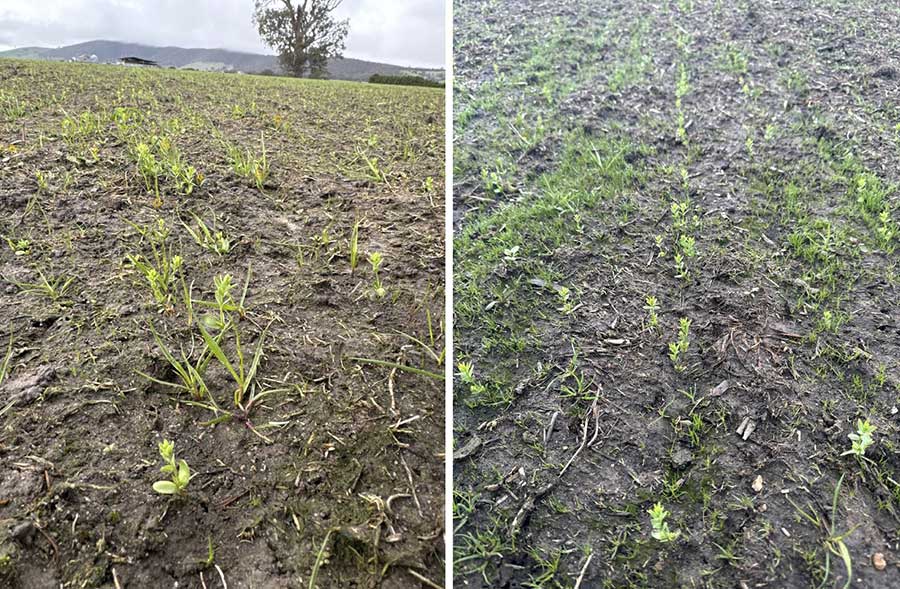
(Below is showing the weeds coming in between the little Linseed plants)
Managing Weeds
Unfortunately the weeds started to come and we could have lost the crop altogether if we had let the rye grass take hold so we decided to spray for a second time.
The next photo I took deliberately because you can clearly see a difference between different management attempts and I felt this supports what I am trying to explain.
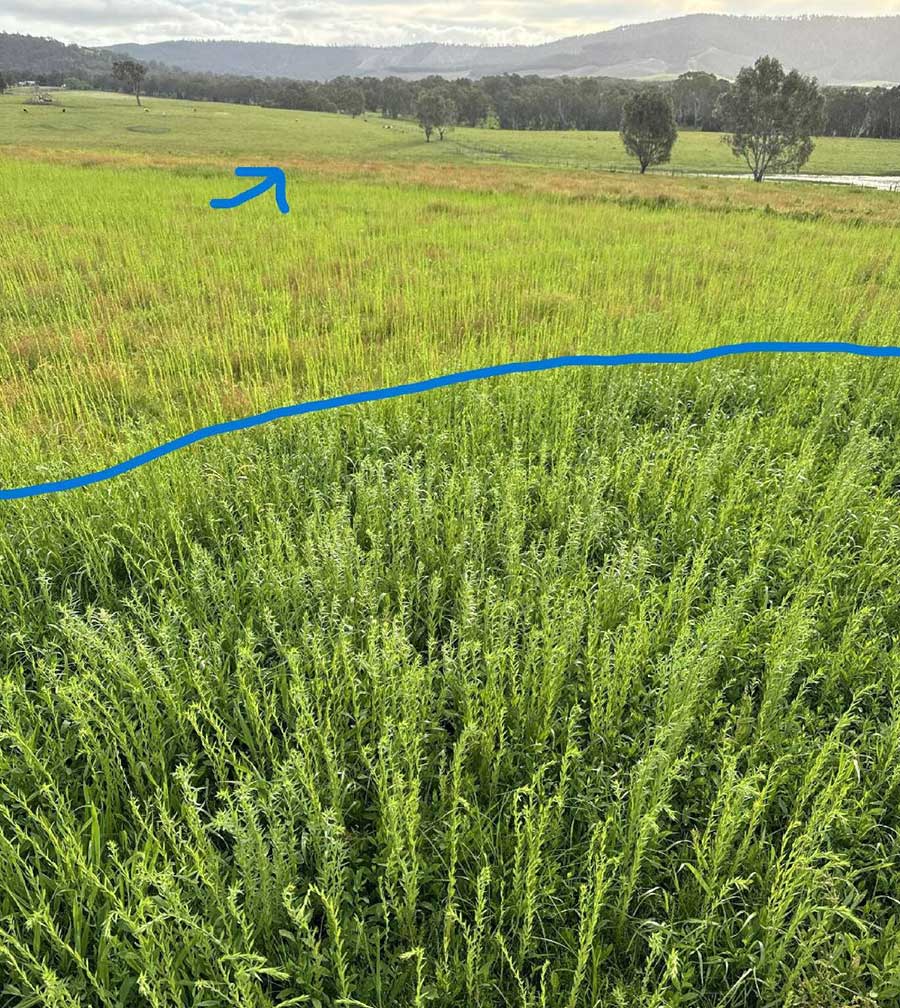
This photo below, taken a month after sowing is embarrassing but really interesting. It shows the dark patch (that the arrow is pointing to) where we ran out of chemicals prior to sowing. We ran out because we borrowed the equipment and we had the rate slightly wrong and then didn’t want to spend any more on chemicals. We just sowed regardless and the result was that the weeds completely smothered out the Linseed.
Increasing Organic Matter and Soil Nutrients
Above the blue line the Linseed is hungry for nutrients and struggling while below the line is where we had fed a roll of hay to the cows in the previous months. You can see the weeds where the rotten hay has been, but they are not having the same effect on the Linseed.
That is because this little patch has created this new environment (similar to what Regen is trying to create and maintain), with increased organic matter providing a food source for beneficial soil organisms, increased water holding capacity and enhanced nutrition retention.
Along with the cow urine and faeces it is also high in nutrients such as nitrogen, phosphorus, potassium, calcium, magnesium, sulfur and micronutrients such as iron, manganese, zinc and copper providing the ideal environment for plant growth. It was at this point that it became very obvious to us that we needed to do a lot more.
If we changed our land management, it has the potential to give us more back and be a lot healthier on the same amount of rain.
I not only wanted to better support our Linseed but I started to look at how we can purposely create this environment across our whole property whilst maintaining animal health and income. This is when I was introduced to worm tea.
Making and Using Worm Tea
Worm tea is a biologically active liquid fertilizer created from vermicompost known for its ability to rebuild microbial diversity, boost organic matter and enhance water retention. It is also easy for plants to absorb which is exactly what our Linseed needed.
So it wasn’t long before I found a local worm farmer. We created a plan to get some tea brewed up and out on the Linseed. We had a big day at work before the whole family chipped in so that we could get it out that night. This was important because the microbes need oxygen and whilst brewing the tea it is aerated until just before application. If it sat for an extended period our Beneficial’s would have started dying.
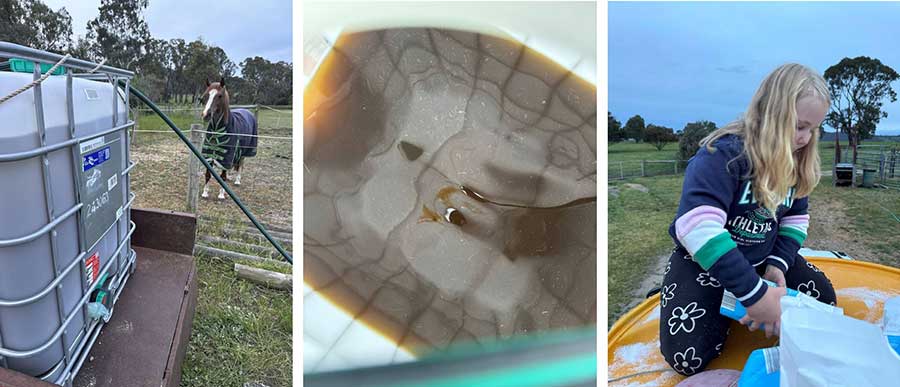
Milo supervising, the brew of worm tea and Maggie feeding the microbes some sugar as we were loading up the spray tank (this spray tank is my uncles that we borrowed and its sole job is for natural liquid amendments, not chemicals).
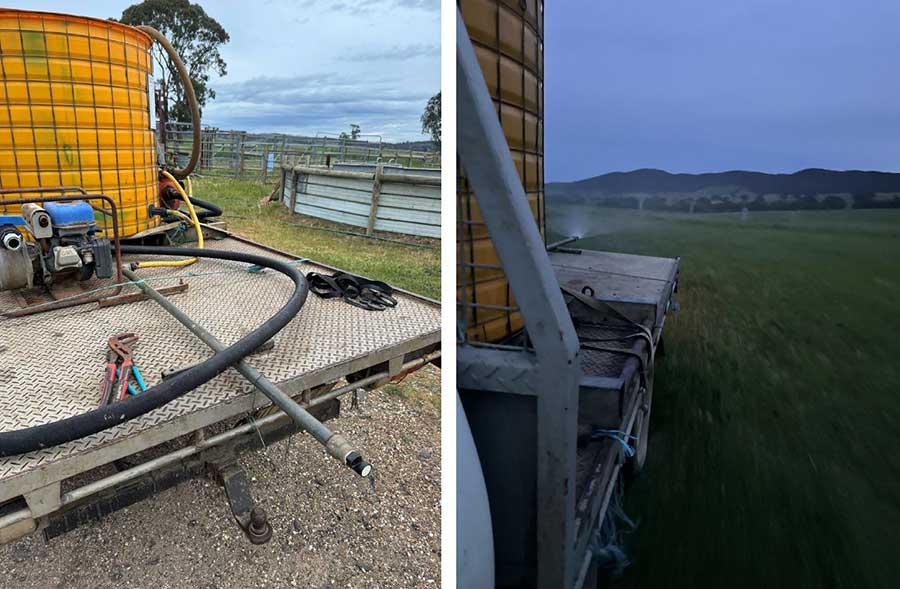
The tank and the spray set up on the back of the ute and applying the worm tea.
Seeing What A Difference the Worm Tea Makes
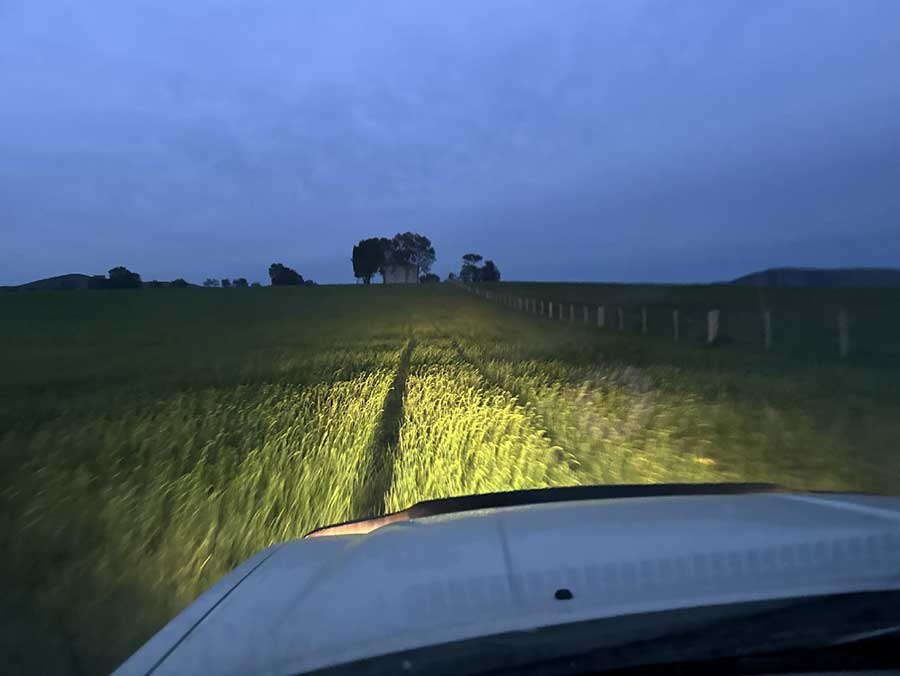
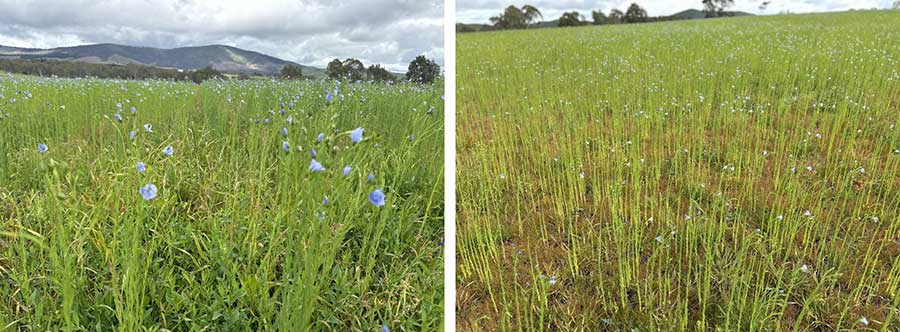
We also ran out of worm tea (we are starting to wonder if this paddock is bigger than we all thought) and we missed the last two runs of our crop. But this was fantastic because we could clearly see how the worm tea influenced the crop. The linseed greened up and looked lush where we applied the tea and the two runs that were missed had yellowing of the bottom leaves on the Linseed and this is a clear sign that it is not happy.
Here we can see the clear difference between where we applied the worm tea and where we ran out. Even the weeds are struggling in the second photo.
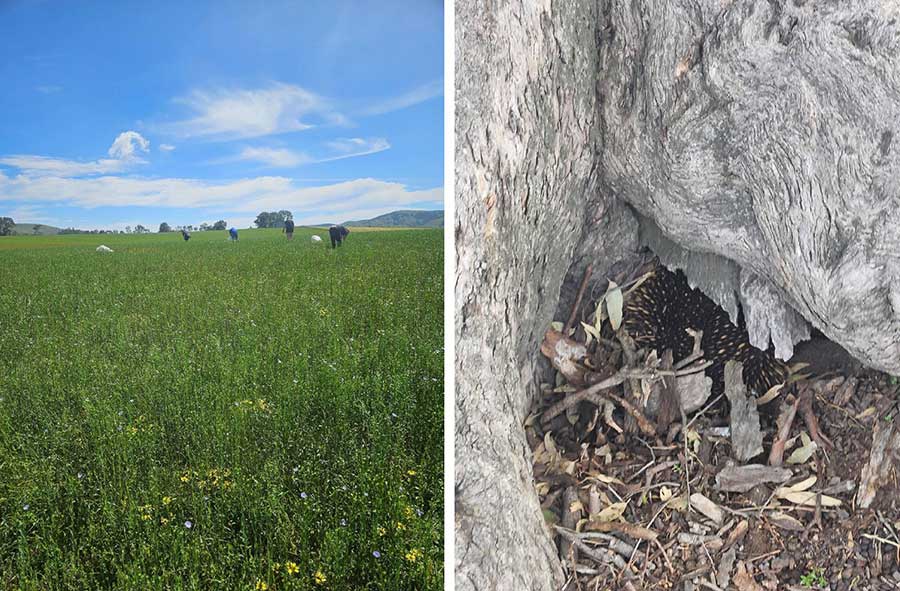
We had some weed that appeared in the crop that was new to the area so I gathered all the employees up and had a day in the paddock weeding. The day was brightened up with a visit from an echidna who thought it was better for him to hide in the tree.
Tackling the Grubs
Our next challenge was the Heliothis Grubs or the Native Budworm, Native_Budworm.pdf
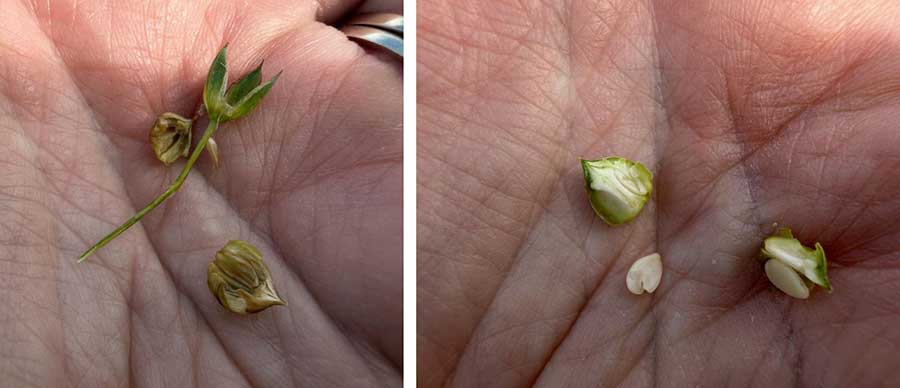
These are a major pest in pulse and canola crops and they love Linseed. They come when the crop is bulbing up and they chew through the seed bulb and eat all the seed leaving an empty bulb. They can devastate a crop in days. The common control practice is insecticides but I am a gardener and I love my beneficial insects. When we went for a walk in the Linseed I could see the Beneficial’s, the local quail and little field birds all hard at work. It was important to find something that would support or strengthen them.
We were very lucky that Dad had some really old product called VIVUS max, ViVus Max | Pest Management Solutions - AgBiTech Australia. It is a natural baculovirus-based biological control registered for use in certified Organic crops and it works by introducing a virus to the caterpillars that spreads throughout their population.
It took a little while to see the results because we applied this a little late in their growth cycle, we had to do two applications but we were very pleased with the results and in future crops we will know how to use this product better.
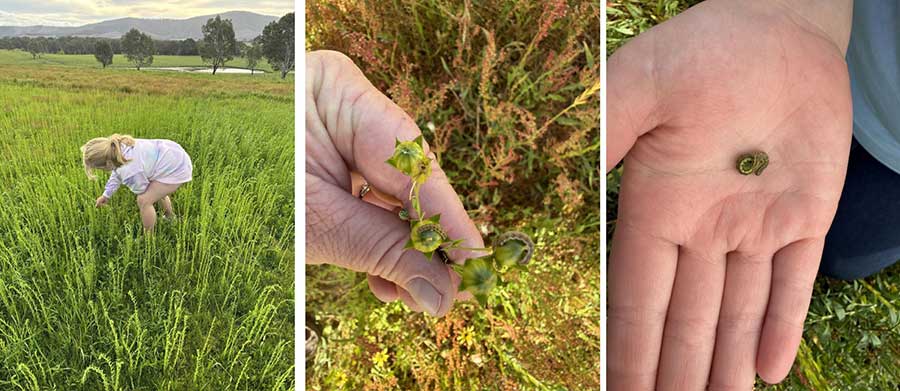
In the below photos you can see the damage caused by the heliothis Grubs, the small hole in the bulb where the grub has eaten the seeds. And then on the left is an empty Linseed bulb, on the right a normal bulb with immature seeds.
Moisture Testing
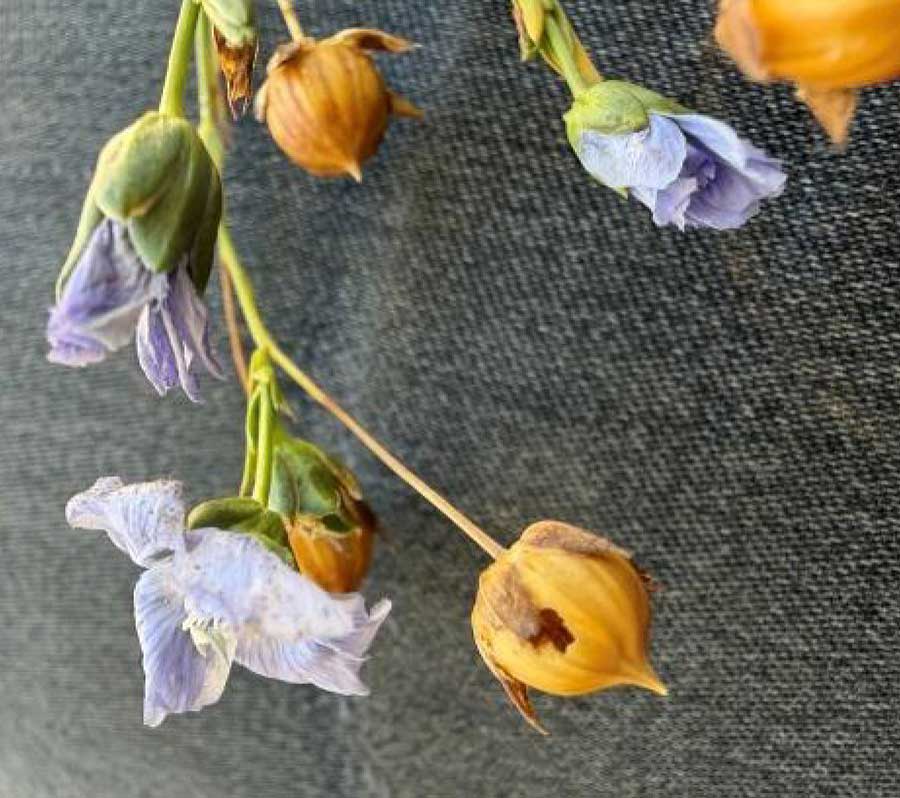
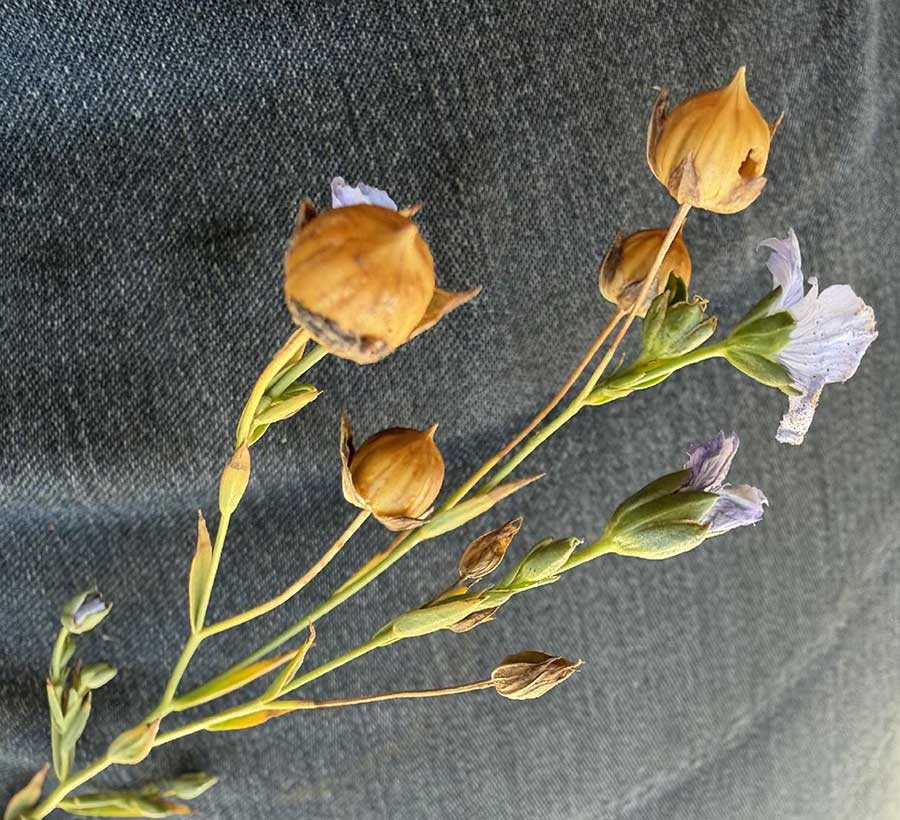
Linseed has the ability to green up again if it has rain in its finishing stage and this is exactly what our crop did, see how this plant has new flowers at various stages as well as dried yellow seed pods.
We then had to wait another month or so for it to mature before being able to harvest the crop.
Before harvesting Linseed it is absolutely critical to test the moisture of the seed. If a Linseed crop is harvested with a high moisture level it can waste in storage over a matter of hours.
To do this we hand pick some dry plants, crush the bulbs and blow the husks and dust off the seeds until we have enough seeds to fill the cup. We tip the seed into the measurement cell before screwing the top on and placing the measurement cell onto the unit and selecting the crop/product. We press a measurement button and receive our moisture level shortly after. If the moisture is too high we wait a few more days before trying again.
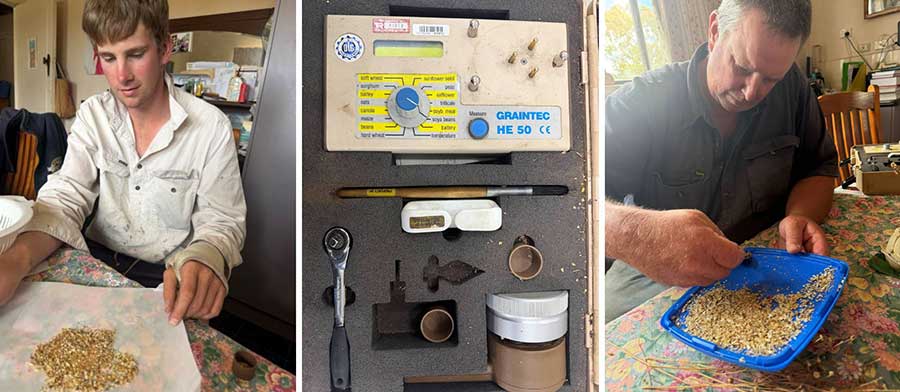
Travis and Mark collecting a sample
Linseed Harvest
When the moisture is right it is time for harvest and Colby was keen to try our little old header.
(Image below: No worm tea applied here, crop is light and yield is low)
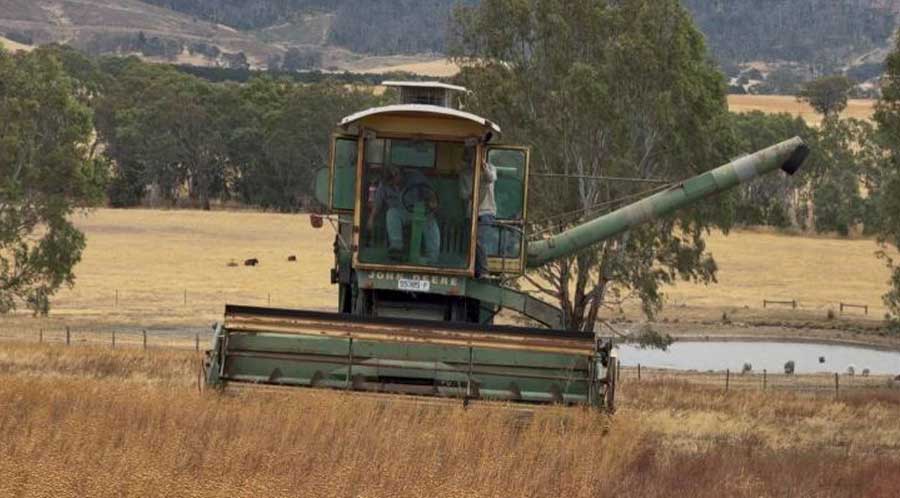
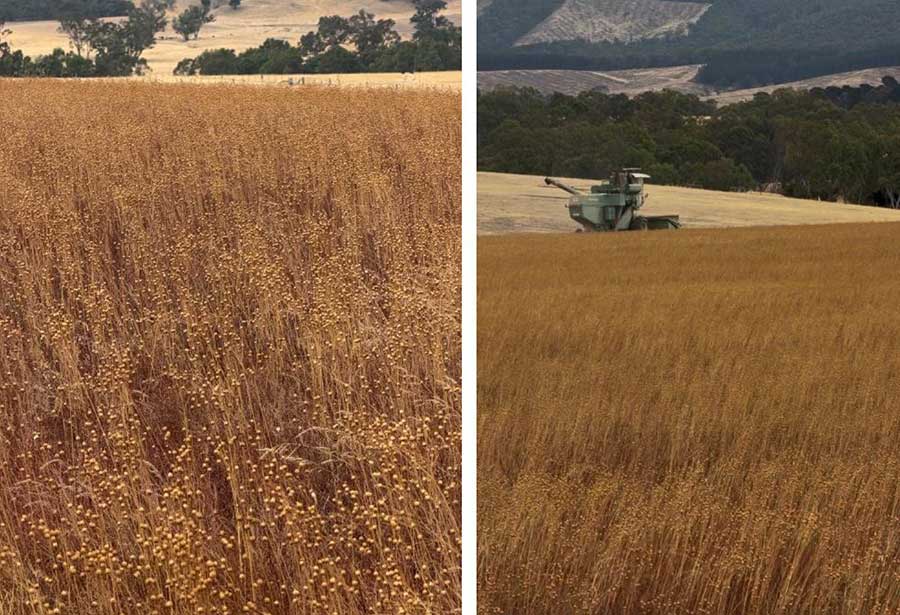
(Images above: Where Worm tea was applied, better yield)
This crop would be a failure in many eyes but not only has it saved and increased our new variety of sowing seed, but it has also shown us that we can get some pretty quick positive results in a short timeframe if we just take time to observe. And we are excited to continue to build our skills and knowledge in regenerative farming so that we can start to contribute to the seed that we are producing for you all.
I hope that you have enjoyed the update and I look forward to sharing more often.
Kind Regards,
Lisa